

Collection: Different types of Calathea
At De Plantrekkers, we understand that choosing the right Calathea variety for your space isn't always easy. Calathea varieties differ in leaf patterns, care requirements, and decorative potential. You want a plant that suits your light, care schedule, and interior style. This list of different Calathea varieties gives you the overview you need to make an informed choice.
Whether you choose Calathea Orbifolia with large, stylized stripes, Calathea Makoyana Whether you're looking for a plant with a delicate medallion pattern or a compact variety for a student room, this article will help you. You'll also find practical care tips, troubleshooting for common problems, and buying advice for a healthy start.
List of different types of Calathea
Calathea is a tropical foliage plant in the Marantaceae family. These species are known for folding their leaves in the evening (a kind of prayer plant effect) and unfolding them again during daylight. This movement is caused by changes in water pressure in cell joints at the base of each leaf.
All Calathea varieties prefer indirect light, high humidity, and regular watering. Leaf markings range from large, broad stripes to fine spots and wavy patterns. Some varieties are more compact and suitable for small spaces; others grow larger and are more impressive.
The main Calathea species are Orbifolia, Makoyana (Medallion), Ornata, Zebrina, Warscewiczii, Rufibarba, Network (Musaica), Triostar, White Fusion, and Lancifolia. Each species has its own unique visual appeal and a slight difference in difficulty.
Popular Calathea varieties and their characteristics
Below you'll find an overview of ten popular Calathea varieties. Each has its own unique color, leaf pattern, and care requirements. This list will help you quickly choose the right plant without having to wade through an overwhelming amount of information.
Calathea orbifolia — large round stripes
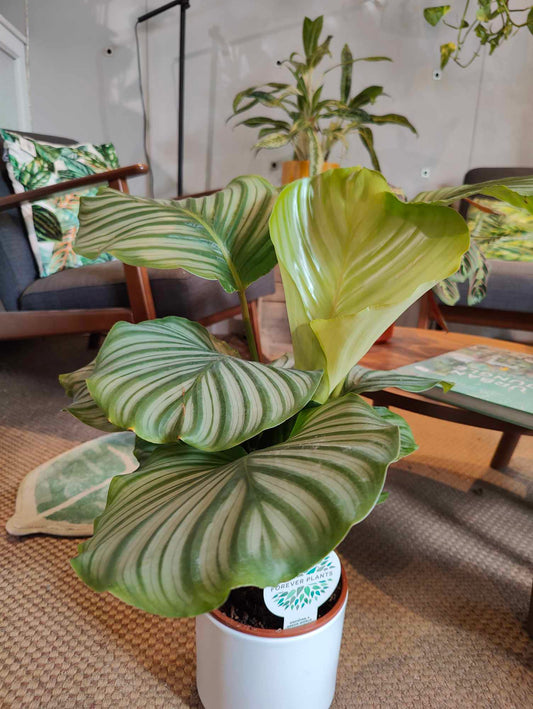
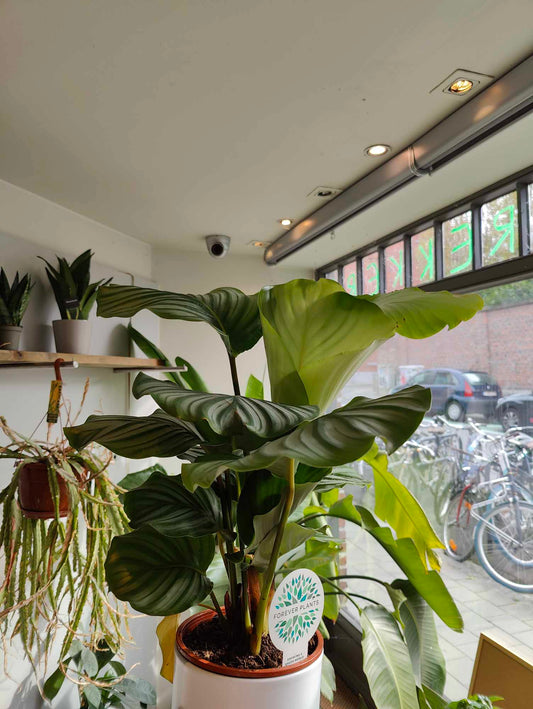
The Calathea Orbifolia It stands out for its broad, almost circular leaves with light-dark green stripes. The leaves are larger than those of most other Calathea species. The Orbifolia prefers indirect light and a constant humidity of around 60 percent. Overly dry air causes brown leaf edges.
This species grows to about 60 centimeters tall and grows slowly but steadily. Pitfall: Dry air. Fix: Place a humidifier nearby or mist the area regularly. Result: Leaves stay fresh and open.
Calathea makoyana (Medallion) — fine drawings
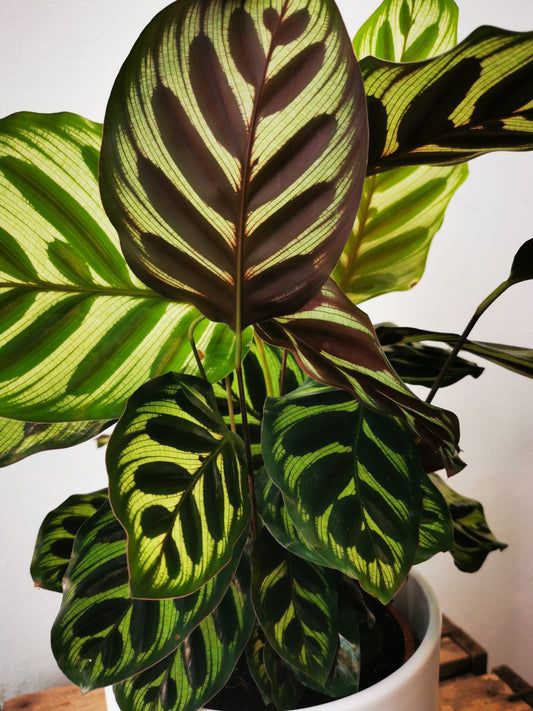
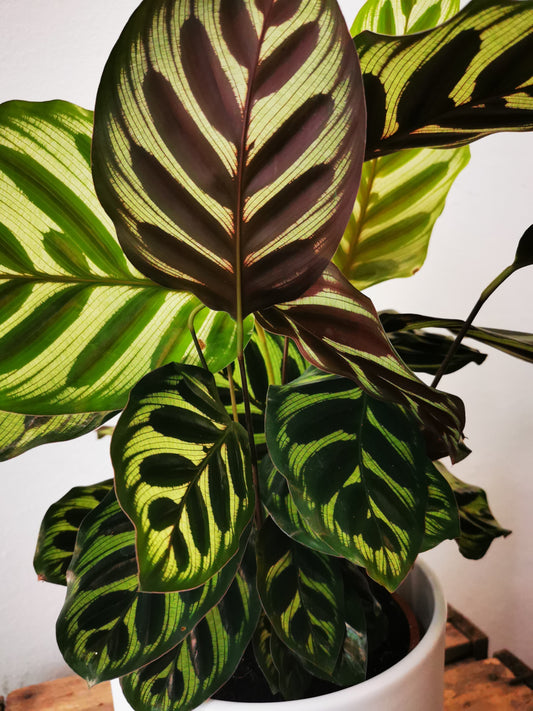
The Calathea Makoyana Also known as the peacock plant, its oval leaves have fine green veins, dark green spots on the upper side, and purple undersides. This combination of patterns makes it a real eye-catcher in your home.
Makoyana prefers indirect light and high humidity. It reacts strongly to chlorine in water, so filtered or rainwater is best. Height: approximately 50 centimeters. Care instructions: Suitable for beginners, with attention to water quality and humidity.
Calathea ornata — ornatal stripes
Calathea ornata is known for its large, elongated leaves with pink to white stripes. In young plants, these stripes are often pink; as the plant matures, they fade to white. The underside of the leaf is a deep purple, contributing to its rich appearance.
Ornata has the same light and humidity requirements as other Calathea species. The pink color of the stripes fades in too much direct sunlight. Pitfall: loss of color. Fix: move the plant further away from the window. Result: the stripes remain bright.
Calathea zebrina — zebra-like leaves
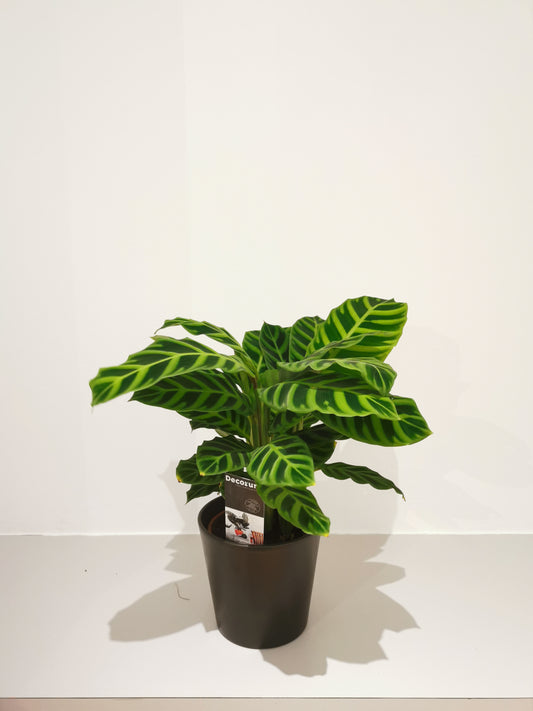
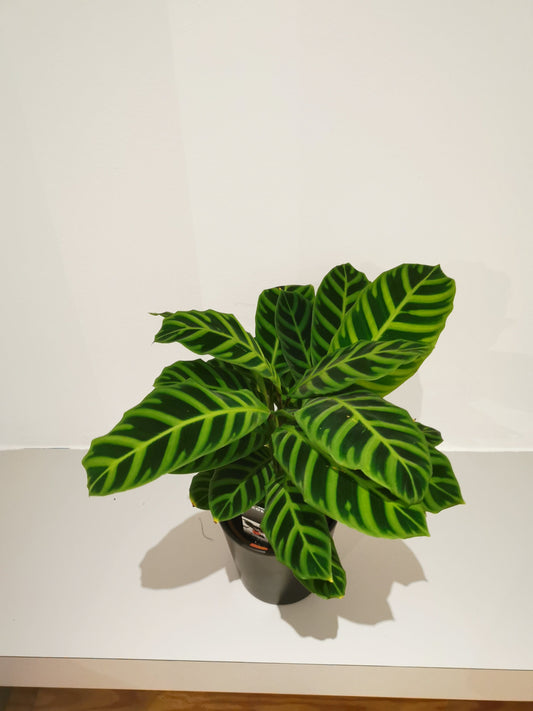
The Calathea Zebrina It has narrow, elegant leaves with dark green and light green stripes running across the leaf. The pattern is reminiscent of a zebra's coat. The underside of the leaf is light red to purple. This species grows to a height of approximately 60 to 80 centimeters.
Zebrina thrives in bright, indirect conditions. Too much sun diminishes the sharpness of the stripes. Watering: Keep the soil slightly moist and avoid standing water. Pitfall: Wilted leaves. Fix: Adjust the water and improve the potting mix. Result: Strong growth and vibrant markings.
Calathea warscewiczii — large, glossy leaves
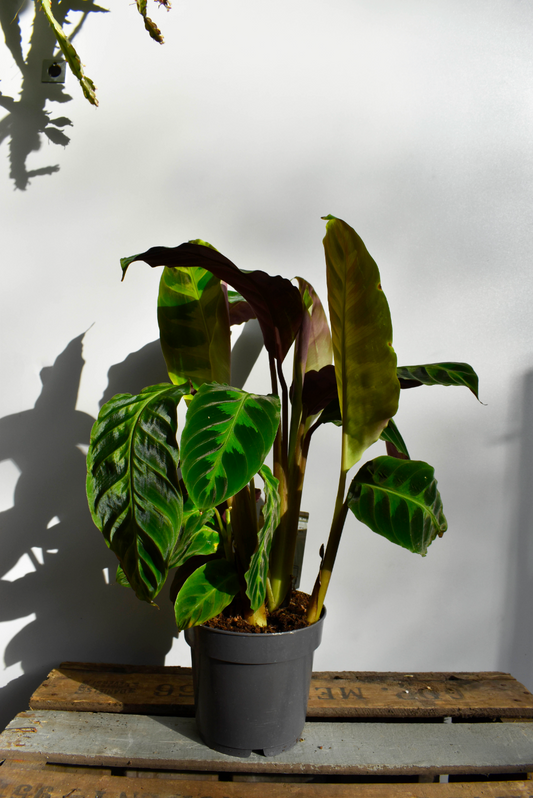
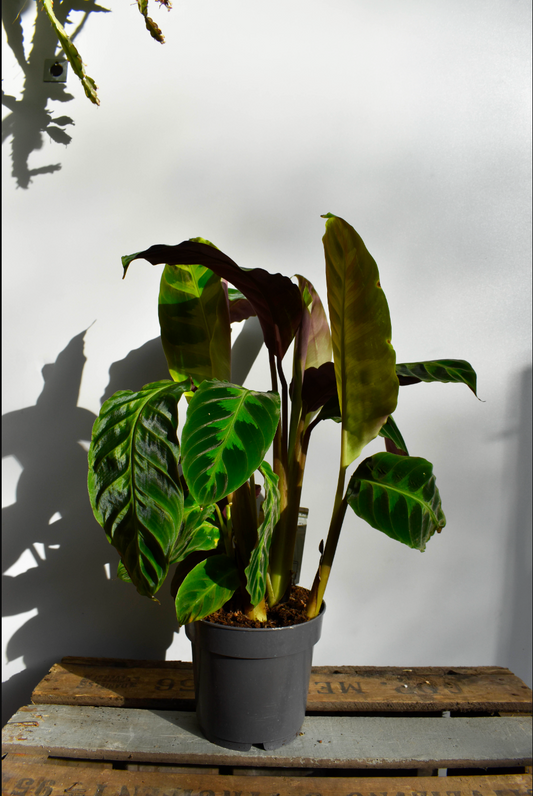
Calathea Warscewiczii Warscewiczii has broad, velvety leaves with dark green and light green patterns. The leaves are slightly larger than those of other varieties and appear richer due to their velvety texture. The underside is purplish-red. Warscewiczii can grow up to 100 centimeters tall under ideal conditions.
This variety requires more space and higher humidity. It's a bit more demanding than compact varieties. Pitfall: curling leaves. Fix: Increase humidity immediately. Result: leaves stay flat and healthy.
Calathea rufibarba (Bluegrass) — velvety underside
Calathea rufibarba, sometimes called Bluegrass, has elongated leaves with a velvety surface. The upper side is dark green, while the underside is often brown to red. The velvet feels soft and gives the plant a unique texture. The leaves are narrower than those of Orbifolia or Warscewiczii.
Rufibarba tolerates slightly lower humidity than other varieties, but still benefits from regular misting or a humidifier. This variety is beginner-friendly and generally less sensitive to dry air.
Calathea network (musaica) — wavy patterns
Calathea Network or Musaica stands out with its mosaic-like pattern of fine lines that divide the leaves into small green patches. The effect resembles glass mosaic or tiles. The leaves are lighter and more compact than those of Orbifolia or Zebrina.
Network is a bit harder to find but popular among collectors. Its care requirements are similar: indirect light, high humidity, and regular watering. This variety grows to about 40 to 50 centimeters tall and fits well on a desk or small plant stand.
Calathea triostar / stromanthe — multicolored leaves (white/pink)
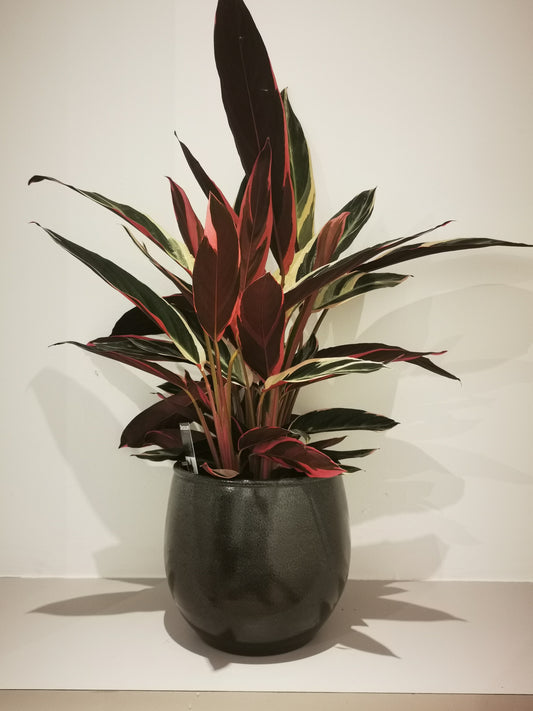
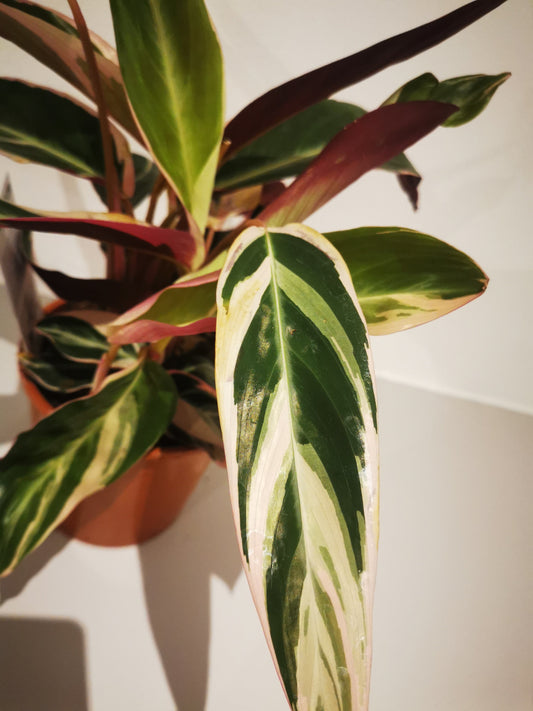
Calathea Triostar (technically a Stromanthe) has leaves with green, pink, and white variegation. The underside is purple-red. This combination makes it one of the most colorful members of the Calathea family.
Triostar requires a bright, indirect location; too little light will fade the pink patches. It thrives at humidity above 50 percent. Height: approximately 70 to 90 centimeters. Pitfall: pink turns green. Fix: move closer to light, but out of direct sunlight. Result: vibrant pink hues are retained.
Calathea White Fusion — Flamed white accents
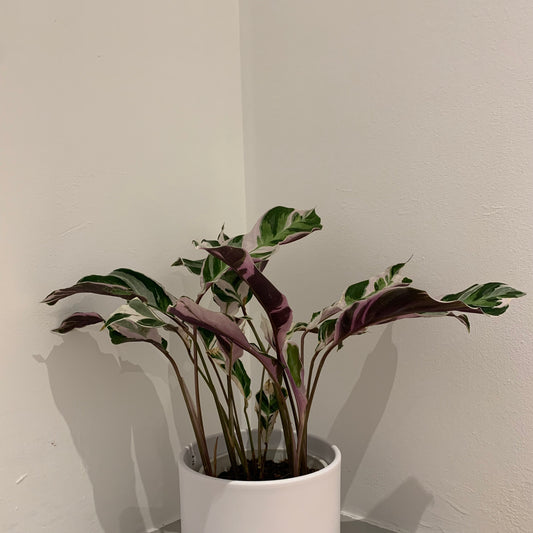
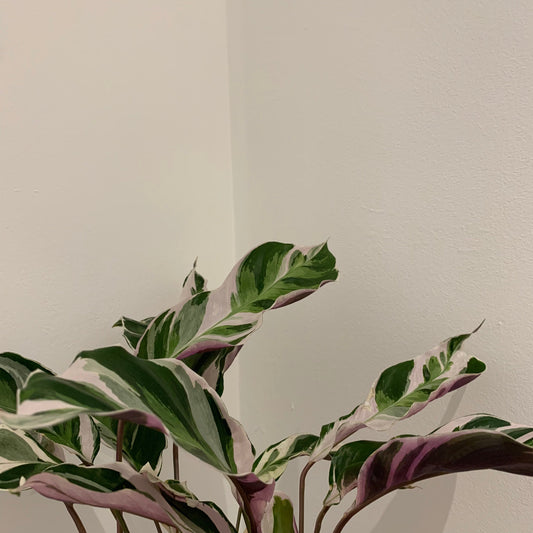
Calathea White Fusion is beloved for its white, green, and purple leaf variegation. The upper side displays white marbled patterns; the underside is purple. White Fusion is sensitive to light: too much direct sunlight burns the leaves, while too little makes the white spots fade.
This species has the highest humidity requirements on the Calathea list. It's suitable for experienced owners who use a humidifier. Height: approximately 40 to 60 centimeters. Pitfall: yellow leaves. Fix: less light and higher humidity. Result: white accents remain striking.
Calathea lancifolia (Rattlesnake) — elongated dots
Calathea Lancifolia, also known as Rattlesnake, has long, narrow leaves with dark and light green spots that resemble a rattlesnake's skin. The underside is purple. This variety stays more compact than Orbifolia or Warscewiczii and is ideal for smaller spaces.
Lancifolia is beginner-friendly and tolerates slightly lower humidity than White Fusion. It grows to about 40 to 50 centimeters tall and is readily available from online plant shops.
Which Calathea is right for your spot?
Not every Calathea thrives in every location. Light, space, and time will determine which variety works best for you. Below you'll find practical guidelines for each situation.
Low light: suitable species
Some Calathea varieties tolerate lower light levels better than others. Calathea Rufibarba, Lancifolia, and Makoyana can handle less intense light. They retain their leaf patterns and continue to grow, albeit more slowly. Pitfall: leaves lose color. Fix: move the plant closer to a window with indirect light. Result: leaves stay green and vibrant.
Precaution: Even in low light, you should adjust your watering regime. Plants grow more slowly and need less water. Check the soil regularly to prevent excessive moisture. Add a Calathea potting soil mix for optimal drainage.
Lots of light without direct sunlight: suitable varieties
Calathea Ornata, Triostar and White Fusion They thrive in brighter, indirect light. More light enhances color contrasts and keeps the pinks and whites vibrant. Direct sunlight burns leaves, so a spot near a north-facing window or a few meters from an east-facing window is ideal.
Consider a sheer curtain to filter bright sunlight. Regularly check the leaves for signs of scorch, such as brown spots or pale discoloration. Pitfall: burnt edges. Fix: move the plant further from the window. Result: vibrant colors without damage.
Small rooms and student rooms: compact Calathea
Calathea Network, Lancifolia and Calathea Sanderiana Are more compact than the larger varieties. They take up less space and fit on a desk, bookshelf, or small plant stand. Their height usually stays under 50 centimeters. These varieties are ideal for student rooms or small apartments.
Tip: Combine compact Calathea with a small humidifier or place a coaster with pebbles and water to increase local humidity. Pitfall: dry air in small spaces. Fix: small humidifier. Result: healthy leaves.
Offices and places with less care time
Calathea Rufibarba and Lancifolia are the least demanding varieties. They tolerate short periods of low humidity and are forgiving of minor watering errors. They are suitable for office environments with air conditioning or heating, provided you regularly check that the soil doesn't become too dry.
Consider a self-watering pot or a humidity meter to simplify care. Pitfall: forgetting to water. Fix: app reminder or weekly check. Result: plant stays healthy without daily attention.
Care tips per species
Each Calathea species has essentially the same needs, but with subtle differences. The following tips will help you avoid mistakes and keep your plant healthy for years to come.
Watering: frequency and common mistakes
Calathea species prefer slightly moist soil, neither soaking wet nor dry. Many owners overwater or underwater. The problem: excessive water intake causes root rot; too little leads to curling leaves.
Practical routine: Check the top 2 centimeters of the potting soil weekly. If it feels dry, water until it flows from the bottom of the pot. Empty excess water from the saucer after 10 minutes. Use filtered water or rainwater to prevent limescale buildup. Pitfall: chlorine and limescale. Fix: Let tap water sit for 24 hours. Result: no brown leaf edges.
Light and location: what each species needs
All Calathea varieties prefer indirect light. Varieties with white or pink variegation (White Fusion, Triostar) require more light to maintain those colors. Darker varieties (Rufibarba, Lancifolia) tolerate lower light levels. Direct sunlight burns leaves within a few hours.
Observation: Rotate your plant a quarter turn every two weeks to promote even growth. Pitfall: One-sided leaf growth. Fix: Rotate the plant regularly. Result: symmetrical leaves and a fuller appearance.
Humidity and spraying: practical routines
Humidity above 50 percent is essential. Many homes in the Netherlands and Belgium have lower humidity in winter due to heating. Spray the leaves regularly with distilled or filtered water, or place a humidifier within 2 meters of the plant.
Alternative: Group several plants together for a local microclimate. Pitfall: mold growth from overwatering. Fix: Water in the morning, not the evening. Result: leaves dry quickly and stay healthy.
Potting soil, pot size and repotting
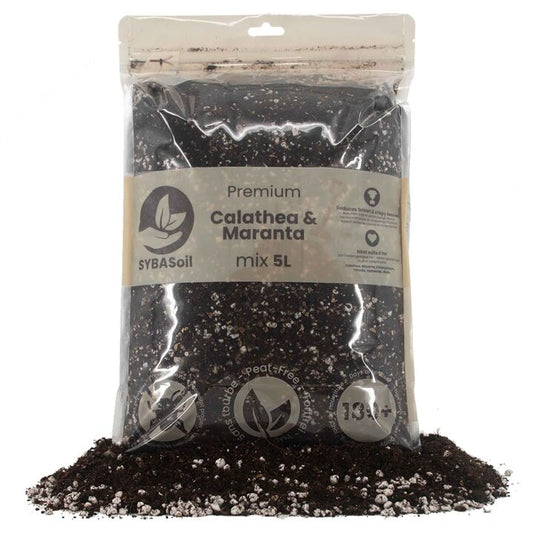
Calathea grows well in airy, well-draining potting soil. A mix of potting soil, perlite, and coconut fiber works well. The standard Calathea potting soil The one you find with us contains these elements. Repotting is necessary as soon as roots grow out of the bottom of the pot, usually every one to two years.
Choose a new pot 2 to 3 centimeters larger than the current one. Pitfall: Pot too large. Fix: Choose a smaller pot. Result: better moisture balance and healthy root growth.
Nutrition and seasonal care
Calathea has limited nutritional needs. Feed with a diluted liquid fertilizer every 4 to 6 weeks during the growing season (spring and summer). Do not fertilize in autumn and winter; plants grow more slowly and absorb fewer nutrients.
Pitfall: Overfeeding causes brown leaf edges. Fix: Reduce fertilizer application or dilute more. Result: healthy growth without burn damage.
Common problems and quick fixes
Every Calathea owner will encounter brown leaf edges, curling leaves, or mold growth at some point. Identifying and taking quick action can make the difference between recovery and leaf loss.
Brown edges and dry tips: causes and solutions
Brown edges are usually caused by excessively dry air or chlorine in the water. Symptoms: brown tips or edges, especially on younger leaves. Action: increase humidity and use filtered water. Expectation: new leaves remain green.
Pitfall: Ignore the problems. Fix: Humidifier and better water source. Result: Stronger leaves without brown edges.
Curling leaves and wilting
Curling leaves indicate underwatering or low humidity. Leaves curl to reduce evaporation. Action: Water until the soil is evenly moist and increase humidity. Observation: Leaves uncurl within 24 to 48 hours.
Pitfall: Expect the plant to recover on its own. Fix: Adjust watering immediately. Result: The plant recovers and leaves open.
Pests and mold: recognize and treat
Calathea is susceptible to spider mites, scale insects, and thrips in low humidity. Control: regularly check the underside of the leaves for small spots or webbing. Action: spray with insecticidal soap or neem oil; repeat every 5 to 7 days until the infestation disappears.
Pitfall: Spread infection to other plants. Fix: Isolate the affected plant. Result: Prevent further damage and speed up recovery. For additional help, see sticky traps against fungus gnats .
Buying Calathea: what to look for when looking at a list of different types of Calathea
Many online stores offer Calathea, but not every plant arrives in top condition. Knowing what to look for when purchasing will save you disappointment and help keep your plants healthy for longer.
How to recognize a healthy Calathea when purchasing
Checklist: firm leaves without brown edges or yellow spots; leaves that fold and unfold well; potting soil that is slightly moist but not soaking wet; roots that are not yellow or black; no spider webs or small insects. A healthy plant starts strong and continues to grow well.
Pitfall: Plants with hidden problems. Fix: Check the undersides of the leaves and the root ball before purchasing. Result: a plant with a healthy starting point. At De Plantrekkers, we carefully check every plant for these points.
Photo selection and species recognition in online shops
Buying online means relying on photos and species descriptions. Look for sharp photos of the leaves, top view, and side view. Check if the species name (scientific) is included and if information about pot size, height, and leaf pattern is included.
At De Plantrekkers, you'll find photos of the current magazine and a brief description of the care level. Pitfall: Received the wrong variety. Fix: Buy from a webshop with clear variety names and a guarantee. Result: the plant you expect.
Starter set recommendation per type (pot, potting soil, basic fertilizer)
A complete starter set consists of the plant, a pot with a drainage hole, suitable Calathea potting soil and a small bottle of diluted liquid fertilizer. For beginners, it's also recommended to consider a humidifier.
At De Plantrekkers, we bundle Calathea varieties with suitable potting soil for an easy start. Pitfall: wrong potting soil or no drainage. Fix: order a complete kit with instructions. Result: a smooth, hassle-free start.
Why De Plantrekkers for your Calathea
De Plantrekkers combines quality, fast delivery, and practical advice from our physical store in Leuven. You get what you need, straight away.
Personal advice from our store in Leuven
Our team is thoroughly familiar with the various Calathea varieties. Do you live in Leuven or the surrounding area? Visit our store and ask questions about care, potting soil, and humidity. We'll take a look at your space and lighting conditions. Virtual questions? Send us a message through our website; we'll respond quickly.
Secure packaging and fast delivery (free from €50)
Calathea leaves are delicate. We package each plant in a protective sleeve and sturdy box. Delivery to Belgium and the Netherlands takes just a few days. Free shipping for orders over €50. Pitfall: damaged leaves upon delivery. Fix: careful packaging. Result: plant arrives undamaged.
Reviews and growth guarantee
Customers rate our service with high scores. Check our homepage For recent reviews, we offer a growth guarantee: if your plant isn't healthy upon arrival, we'll contact you for a replacement or refund.
Order and delivery of Calathea
Order online and receive your order within a few days. Read below to learn more about our shipping system and how we package plants.
Shipping weeks, delivery times and track & trace
We ship every Monday, Wednesday, and Friday. Order before noon, and your plant will be shipped the same day (subject to availability). Delivery days are Tuesday through Saturday. You'll receive a track and trace link so you'll know exactly when your package will arrive.
How we pack your Calathea for damage-free delivery
Each Calathea is placed in a protective sleeve that secures and supports the leaves. The pot is stable in a box with cushioning material. The box has ventilation holes so the plant can breathe during transport. As a result, the leaves remain strong and undamaged.
Returns, warranty and aftercare
Not satisfied? Contact us within 7 days. We'll assess the plant's condition together using photos. The growth guarantee applies to healthy plants upon receipt. For aftercare questions, please call, email, or visit us in Leuven.
Contact us for advice and ordering
Do you have any questions about Calathea White Star , Calathea Fusion Yellow Or which variety is best suited to your space? Contact us via the website or visit our store in Leuven. We're happy to help with personalized advice and a complete starter kit to get your plant off to a strong start.
Discover the list of different types of Calathea in our webshop , choose your favorite leaf pattern and order with free shipping from €50 to all of Belgium and the Netherlands.

Mogelijk ook interessant
-
Potting soil for Calathea & Maranta 5L
Regular price €12,00 EURRegular priceUnit price per -
 Sold out
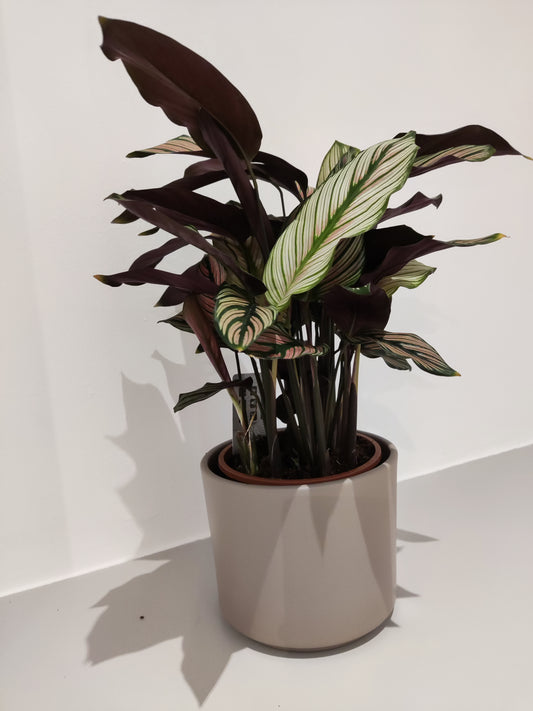
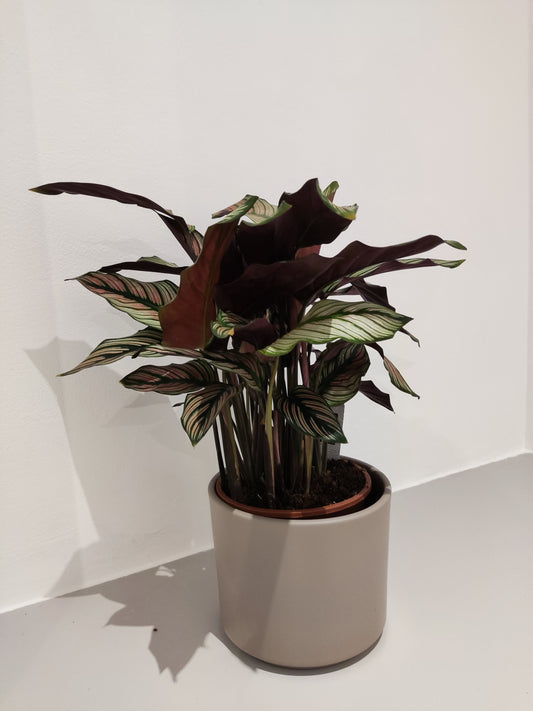
Calathea White Star
Regular price €17,00 EURRegular priceUnit price per€20,00 EURSale price €17,00 EURSold out -

 Sold out
Calathea Makoyana (Peacock Plant)
Regular price From €12,00 EURRegular priceUnit price per -
 Sold out
Calathea Triostar
Regular price From €17,00 EURRegular priceUnit price per -
 Sold out
Calathea Zebrina
Regular price €17,00 EURRegular priceUnit price per -
 Sold out
Calathea Orbifolia
Regular price €17,00 EURRegular priceUnit price per -

 Sold out
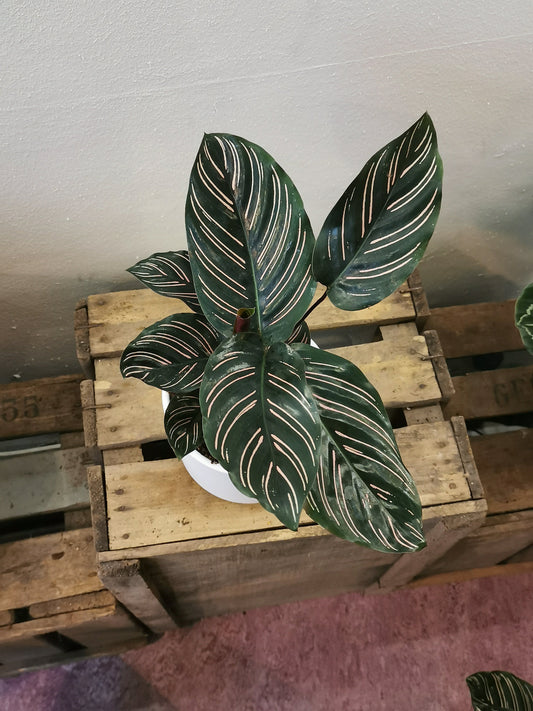
Calathea Sanderiana
Regular price From €18,00 EURRegular priceUnit price per -
 Sold out
Calathea White Fusion
Regular price €21,00 EURRegular priceUnit price per -
 Sold out
Calathea Warscewiczii
Regular price €30,00 EURRegular priceUnit price per


Lees onze blogsposts
View all-
How to care for Calatheas
Arthur LauwersCalatheas are beautiful, tropical plants that originally come from the jungle. They are known for their striking, variegated leaves, which can be green, pink, purple or red. Calatheas are not...
How to care for Calatheas
Arthur LauwersCalatheas are beautiful, tropical plants that originally come from the jungle. They are known for their striking, variegated leaves, which can be green, pink, purple or red. Calatheas are not...
-

Watering the Monstera (Swiss Cheese Plant)
Arthur LauwersWhen it comes to caring for your Monstera deliciosa, also known as the Swiss Cheese Plant, one of the most important factors to consider is watering. In this blog, we’ll...
Watering the Monstera (Swiss Cheese Plant)
Arthur LauwersWhen it comes to caring for your Monstera deliciosa, also known as the Swiss Cheese Plant, one of the most important factors to consider is watering. In this blog, we’ll...
-

Lavendel stekken
Arthur LauwersLavendel stekken: wanneer en hoe? Stap-voor-stap gids | De Plantrekkers AL Arthur Lauwers Nieuw - april 2026 Lavendel stekken: wanneer en hoe maak je gratis nieuwe planten? Van één lavendelplant...
Lavendel stekken
Arthur LauwersLavendel stekken: wanneer en hoe? Stap-voor-stap gids | De Plantrekkers AL Arthur Lauwers Nieuw - april 2026 Lavendel stekken: wanneer en hoe maak je gratis nieuwe planten? Van één lavendelplant...
-

Lavendel snoeien: wanneer en hoe doe je dat?
Arthur LauwersLavendel snoeien: wanneer en hoe? Complete snoeileidraad | De Plantrekkers AL Arthur Lauwers Nieuw - april 2026 Lavendel snoeien: wanneer en hoe doe je dat? Niet snoeien is het snelste...
Lavendel snoeien: wanneer en hoe doe je dat?
Arthur LauwersLavendel snoeien: wanneer en hoe? Complete snoeileidraad | De Plantrekkers AL Arthur Lauwers Nieuw - april 2026 Lavendel snoeien: wanneer en hoe doe je dat? Niet snoeien is het snelste...


