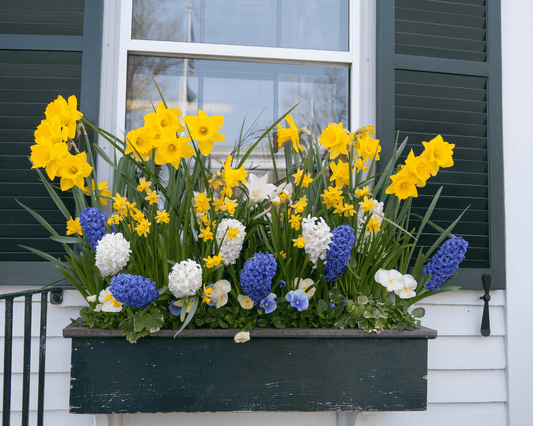
10 hardy plants for flower boxes
Share
If you're looking for strong, green decorations for your balcony or patio that will survive the entire winter, hardy plants for planters are the ideal solution. These robust green additions can withstand frost, rain, and wind, and are sure to impress with their sleek leaves, colorful buds, and early blooms in February and March. For many Dutch-speaking first-time gardeners and enthusiasts, a well-stocked planter not only offers winter color but also peace of mind: you don't have to start over every season.
What should you look for when choosing hardy plants for planters? Consider adequate pot size, a well-draining soil mix, and robust frost resistance. Don't forget that these plants in containers require more drainage than those grown in the ground, and that the combination of pot, plant variety, and care determines how beautiful your planter will remain. The following sections will guide you through ten tried-and-true varieties, practical combinations, potting soil and drainage tips, and common mistakes, so your garden or balcony stays vibrant in January.
What are hardy plants for flower boxes?
Hardy plants for flower boxes are varieties that easily tolerate periods of frost down to an average of minus ten degrees Celsius and often also withstand wind and fluctuating moisture conditions. Their roots are strong enough to continue growing in a limited pot volume, while the leaves and stems remain compact and tough. Criteria: a large, healthy root ball, firm leaves that don't brown after the first cold night, and flowers that truly appear in winter or very early spring.
Compared to true border plants, potted plants receive less insulation from the ground. A freezing pot cools faster and deeper than a planting bed. Tip: choose hardy varieties that thrive in cooler regions and can therefore easily withstand a true winter climate. Winter splendor comes in two types: evergreens (always leaves, sometimes small flowers) and winter bloomers (alternating buds and early flowers). Both serve the same purpose: a continuous green, often colorful display from October to April.
10 hardy plants for flower boxes
Below are ten hardy plants for flower boxes that you can buy throughout the Netherlands and Belgium and are tried and tested for patios, balconies, and front gardens. The selection ranges from compact groundcovers to slightly taller shrubs. Together, they offer a rich mix of foliage, flowers, and texture, so you can always create a good mix.
Skimmia japonica 'Rubella' – ideal evergreen
The popular Skimmia japonica 'Rubella' is a strong, hardy, and reliable evergreen that bears red flower clusters all winter long. Plant it alongside winter heather (Erica carnea) for a true display of winter color. The glossy, dark green foliage provides a perfect backdrop for the red buds, and the shrub maintains its compact shape without pruning. An added bonus: shade is no problem either, although the red tufts are slightly less intense in a dark corner.
The Skimmia grows slowly in a pot, reaching a height of about 40 to 60 centimeters after a few years. Ensure the potting soil is slightly acidic (pH around 5.5 to 6), such as the mix for Ericaceae. Water moderately, allowing the top of the pot to dry slightly between waterings. Its robust roots and moderate moisture requirements make this an excellent option for busy homeowners or office owners who can't water every day.
Erica carnea (winter heath)
Erica carnea produces small pink, white, or red flowers from December to March. This evergreen winter heath has needle-like foliage and grows low to the ground, ideal for the front of a flower box. Winter heath thrives in full sun and is moderately frost-hardy, as long as the pot provides adequate drainage. Avoid allowing the roots to sit in freezing mud, and fill the container with airy potting soil (for example, Ericaceae mix).
Erica carnea combines very well with Skimmia, as the topic already indicated, or with succulents such as small Winter heather. Pruning is unnecessary; remove any wilted branches after flowering. Note: winter heather blooms longest in cool but sunny weather, so be careful not to place it too warmly against a facade. It's best to choose an open space at the edge of a patio.
Winter violets (Viola)
Winter pansies are low-growing, single-flowered or multi-flowered violets that offer color from October to April. They are considered truly hardy plants for window boxes, as their roots can withstand short nights down to minus five degrees Celsius and then simply continue blooming as soon as the sun returns. Option: choose violet, yellow, white, or bicolored cultivars to keep the box cheerful. Plant them close together, for example, ten to fifteen plants in a 50-centimeter container, for a full look.
Care is simple: water in dry weather (no fertilizer required), and cut off dead flowers for more blooms. The advantage of Viola: they're inexpensive, grow incredibly quickly, and offer immediate results. The disadvantage: after April, they wilt and need replacing with spring bulbs or summer flowers. Nevertheless, a winter pansy is ideal for beginners who want real color without a large investment.
Helleborus (Christmas rose)
The Christmas rose (Helleborus) blooms between December and March with large, white, pink, or green blooms. The foliage often remains green, creating a striking contrast with the flowers. A single Helleborus in a large pot (at least 25 to 30 centimeters in diameter) is striking enough. A Christmas rose is truly hardy in the ground, but in a pot, it requires good potting soil (partially composted leaves with a little sand) and a location that doesn't get too wet.
Helleborus prefers partial shade: a north- or east-facing spot with morning sun is ideal. Note: the petals can scorch in bright afternoon sun. Because potted Helleborus has limited space, it's best to add some matured compost to the top of the soil every spring for extra nutrition. Combine with low-growing groundcovers such as creeping black green to enhance the effect.
Gaultheria procumbens (mountain tea)
Gaultheria procumbens is an evergreen hardy plant for window boxes and produces red berries in winter that last well into spring. The compact foliage is green and glossy, perfect for filling low corners in a container or as an edging for a taller shrub like Skimmia. It grows slowly and stays under 20 centimeters tall, making it suitable for smaller pots.
Advantage: the berries are decorative and combine easily with other Ericaceae plants, such as winter heather. Disadvantage: you need to ensure an acidic soil mix and avoid overwatering the pot, as Gaultheria is susceptible to root rot. Water sparingly in winter, but don't let it dry out completely. Winter berries attract birds, so be mindful of any bird droppings on your balcony.
Carex morrowii (sedge)
Carex morrowii is an ornamental grass that retains its green or creamy-white striped leaves year-round. It's an excellent addition to winter bloomers for a more playful look. Sedge is airy, sways with the wind, and tolerates full sun or partial shade. Carex is one of the strongest winter-hardy plants for flower boxes: its roots easily tolerate minus ten degrees Celsius, as long as the pot isn't frozen for days.
Care: Remove dead leaves every spring and plant Carex in an open potting mix (garden soil with some sand or perlite for drainage). Water moderately, not too wet, but also not completely dry. Combine with both flowering plants and other grasses. Tip: plant several sedges in a single container for a modern, architectural look. Choose a flower box subscription It can be helpful to alternate this seasonally with other plants.
Ajuga reptans (creeping bugle)
Ajuga reptans has small, glossy leaves that grow close together, often with a purple or coppery hue. In spring, it blooms briefly with blue flower stalks. Ajuga is a groundcover that quickly fills the pot, but is also easy to keep under control by cutting away excess shoots. Advantage: it stays low (10 to 15 cm), ideal for edging, and requires little care.
Creeping black green is winter-hardy to an average of minus fifteen degrees Celsius in the ground, but slightly less so in a pot. So make sure the pot is not exposed to strong winds without shelter. In case of severe frost, you can also place the pot against a wall for a short time or wrap it in a layer of jute. Ajuga combines beautifully with higher foliage plants in the center of the container, keeping the edges full and low.
Imperata cylindrica 'Red Baron' (Japanese blood grass)
Japanese blood grass already turns red by mid-summer, but in winter the leaves turn an even deeper red or burgundy. Height: approximately 30 to 40 centimeters, making it suitable as a central eye-catcher. Imperata cylindrica is winter-hardy, but in extreme frost below -15 degrees Celsius, the leaf tips turn brown. This doesn't harm the roots, however; everything grows back in spring.
Plant Japanese blood grass in a pot with ample drainage, and add sand or perlite to the mix. Water carefully in winter to prevent the roots from freezing. Planting the sturdy grass among lower groundcovers creates a beautiful height contrast. Tip: Imperata also gives the flower box a warm, red hue in the evening and in the morning mist, a welcome complement to green leaves or white flowers.
Cyclamen coum
Cyclamen coum is known as a small, early-flowering cyclamen with pink or white flowers starting in January. The leaves are often marbled with silvery gray, which creates a playful effect. This cyclamen is winter-hardy down to about minus ten degrees Celsius, but in a pot without substantial insulation, you should be careful with prolonged frost. A sheltered spot under a roof or against a facade helps. Plant several bulbs in a group for a lush effect.
Advantage: Cyclamen coum often blooms continuously for weeks, while winter pansies sometimes take a break in severe cold. Disadvantage: the bulbs don't tolerate wet feet, so good drainage is crucial. Combine with low ferns or small grasses for a more interesting look. Cyclamen works best in partially shaded corners where other flowers receive little energy.
Ilex crenata (small holly)
Ilex crenata grows compactly and offers evergreen, glossy leaves that are stiff and small. The shrub has a boxwood appearance but is more resistant to the boxwood moth. In winter, Ilex crenata bears black berries that create a calm contrast. Holly is winter-hardy to an average of -15°C (-50°F) and is particularly hardy in a pot, provided you choose a generous pot size (30 to 40 cm diameter for a 40 to 50 cm tall plant).
Care: Water when the pot feels dry (do not leave it soaking wet), and repot every two years with fresh potting soil. Ilex crenata can be trimmed to shape or simply allowed to grow freely, depending on your style. The shrub forms a sturdy backbone in the flower box and provides structure between lower ground cover plants. Think of winter heather or a winter flower box subscription to ensure that the box remains up to date throughout the year.
Combinations and color schemes for winter flower boxes
A strong winter flower box is created by combining color, height, and texture. A pitfall: too many varieties in one box makes the look cluttered. Fix: choose two or three plant varieties and repeat them. The result: a harmonious, recognizable whole with an eye for detail. The following sections provide concrete examples and show how to combine height and texture for a layered effect.
Examples: red-green contrast, soft pastel shades, shrub + ground cover
A red-green contrast works classic: Skimmia with red clusters + dark green winter heather + purple or red winter violets. The contrast is strong but not garish. Soft pastel shades are more modern: think white winter violets, pale pink Erica carnea, and gray-green Carex for a soothing look. A shrub plus ground cover is practical: place one Ilex crenata centrally and fill the edge with Ajuga reptans, this keeps it airy and makes maintenance easy.
Another approach: monochrome white and silver with Cyclamen coum (white), silver-gray Carex, and light stones around the edge for added contrast. Option: add a small accent of red Gaultheria berries. Note: choose plants with similar water requirements. For example, don't place succulents near Erica carnea; they'll get too much water and rot. A good color scheme is created by first sketching the desired color, then choosing the plants, and finally matching the pot and potting soil.
How to Plant Height and Texture in One Container
Layering: Place the tallest plant (e.g., Ilex crenata or Japanese blood grass) at the back or center, surrounded by medium-tall varieties (Skimmia, Helleborus), and low ground cover plants (winter heather, Ajuga) along the edge. This creates a natural slope. Texture: Combine coarse leaves (Helleborus) with fine needle leaves (Erica carnea) and grassy ribbons (Carex, Imperata) for variety. The eye naturally flows through this mix, giving the planter an exciting and dynamic look.
The shape of the pot also influences how height works. A low, wide bowl requires a maximum of two tiers (low + middle), while a deep pot offers space for three tiers. Keep your design simple: first determine your highest point, place it slightly off-center (left or right of the center), and fill the other side with lower clusters. Note: don't overdo it with too many different varieties; limit yourself to three to five varieties for a recognizable narrative.
Pot size, substrate and drainage for winter-hardy flower boxes
Pot size and soil choice determine whether winter-hardy plants for flower boxes truly survive. A pot that's too small will freeze faster and dry out, while a soil mix that's too heavy will retain water and rot the roots. Below are practical guidelines for diameter, depth, soil composition, and drainage, focusing on frost resistance.
Which pot size suits which plant and how many per pot?
Pitfall: Many people choose pots with a diameter of 20 to 25 cm, even though a mature Skimmia or Helleborus barely has room in that. Fix: Use at least a 30 cm diameter for a single shrub and choose 40 to 50 cm diameter for combinations with two or three varieties. Result: sufficient space for root growth, plus insulation from extreme cold. Rule of thumb: add up the final height of the plant, divide by two, and you have an estimate for the pot diameter in centimeters (for example: two 40 cm tall plants = 40 cm pot diameter).
Depth: Hardy groundcovers like Ajuga or winter heather can get by with a depth of 15 to 20 cm, but an Ilex crenata requires at least 30 cm. Number of plants: In a 50 x 30 cm container, plant one shrub, two medium-tall plants, and three to five low groundcovers or pansies. This prevents plants from crowding each other, while still filling the pot. Note: Check that the pot is frost-proof; terracotta can crack in severe frost.
Best soil mix and drainage tips for frost resistance
Standard potting soil for winter is often too compact. A better solution: mix garden soil (50%) with perlite (20%), sand (10%), and composted leaves (20%). This mixture retains moisture without becoming muddy and allows excess water to drain away. Another option: add some crushed ceramic or gravel to the bottom of the pot for extra drainage. Avoid multipurpose potting soil with too much peat, as it will collapse in frost and block the holes in the pot.
Frost resistance: In a loose mix, ice can spread without destroying the roots. Pitfall: Pots without holes in the bottom accumulate excess water, which freezes in frost and causes the pot to crack. Fix: Always drill drainage holes, or choose pots with multiple holes. Result: Plants can even survive weeks of minus five degrees Celsius without waterlogging. Note: After heavy rain, check that the soil isn't saturated; lift the pot to feel if it's excessively heavy. If necessary, tilt the pot to allow excess moisture to drain.
Plants and care per season
Hardy plants for flower boxes remain thriving best when planted and cared for at the right time. Autumn is the ideal planting season, while winter and early spring require adapted watering and feeding strategies. The subsections below cover the three most important phases: planting, winter care, and spring fertilization.
Planting times: best months to plant
The ideal period for winter-hardy varieties is September to mid-November. The soil is still warm enough for root formation, while the air is already cooling. This allows plants to develop roots before putting energy into new leaves or flowers. Pitfall: wait until after the first frost. Fix: plant as early as possible in the fall, so the roots have at least four weeks to establish. Result: a strong start to the winter with limited root stress.
Alternative: early spring (February to March) also works, but you'll miss the full winter colors and blooms. Never plant when the ground is frozen; the roots can't take hold, and the plant remains vulnerable. Note: If your ordered plants arrive in midwinter, plant them immediately in a flower box in temperate weather (around zero degrees Celsius) or keep them in a cool garage until you have a milder day.
Winter care: water, frost protection and checklist after delivery
Water: Water evaporates more slowly in winter, so less watering is necessary. Pitfall: Keep outdoor pots completely dry. Fix: Feel the soil every ten days; if the top is rock-hard or bone-dry, give a small amount of lukewarm water. Result: roots maintain contact with moisture and plants don't discolor. Note: Don't leave it soaking wet, as freezing water destroys root structures. Option: Place the container under a sheltered roof or against a wall to partially catch rain and snow.
Frost protection: If frost is expected below minus ten degrees Celsius, wrap the pot in burlap or bubble wrap. Never use plastic directly over the foliage, as condensation can cause mold. Checklist after delivery: check for brown or broken branches and cut them away; remove loose dead leaves; add soil if the pot isn't full enough; water lightly; place the planter in a bright, sheltered spot. This way, plants will start the winter healthy.
Spring: fertilization and rejuvenation of the flower box
March or early April is the time to breathe new life into hardy planters. Fertilizer: Sprinkle a handful of slow-release granules (for example, 10-10-10 NPK) over the soil and work them in lightly. Dosage: Approximately 5 to 10 grams per liter of potting soil. Pitfall: Too much fertilizer burns roots and causes overgrowth. Fix: Follow dosage instructions and err on the side of caution. Result: Healthy foliage and vigorous flowering for spring and summer.
Rejuvenation: Remove dead leaves, cut back excess branches on Skimmia or Ilex, and check if the soil is still sufficiently aerated. If necessary, lift the plant from its pot and replace the top layer of potting soil (5 cm) with fresh mix. This prevents sagging. Option: If the planter has become too crowded, divide the ground cover plants in half and plant them in a second pot. Less competition means stronger plants. Focus: Early spring care in the planter determines whether your season gets off to a smooth start or whether you need to recover from winter damage.
Common mistakes and how to avoid them
Despite being labeled winter-hardy, many flower boxes fail due to practical mistakes: wrong pot size, excessive feeding, or mismatched combinations. The sections below will help you avoid these classic mistakes and offer concrete solutions to keep your winter-hardy planters healthy.
Too deep pots, poor drainage and too much fertilizer
Pitfall: A 70 cm deep pot seems luxurious, but the soil at the bottom always stays wet. Fix: Choose a maximum depth of 40 cm for average winter-hardy plants, or provide a thick layer of ceramic potting mix at the bottom. Result: The potting mix dries out faster between waterings, which prevents root rot. Pitfall: Holes in the pot clogged with leaves or silt. Fix: Check every autumn that water can drain freely; clean the holes with an old fork if necessary. Result: No blockages that trap frost.
Pitfall: Too much fertilizer in winter. Fix: Fertilize only in early spring or late fall, not in December or February. Result: Plants don't slump or burn. Pitfall: Potting soil too peat-rich. Fix: Mix with sand and perlite, as discussed earlier. Result: The soil saturates less quickly and remains aerated. Check: Lift the pot; an extremely heavy pot after rain means poor drainage; time to improve the soil mix.
Wrong combinations and too many plants per container
Pitfall: a water-requiring Helleborus next to a succulent or succulent green as aloe vera in the same pot. Fix: Group plants with similar water needs. Result: You can water each plant healthily without drowning one and starving the others. Pitfall: Too many varieties (six or seven) in a single 50cm pot. Fix: Stick to three to five varieties with multiple specimens. Result: Root space, neater appearance.
Pitfall: Light requirements clash. Fix: Don't place shade-loving Helleborus and Carex in full midday sun; choose partial shade. Result: no scorched leaves. Pitfall: Varieties vary greatly in growth strength. Fix: A very strong ground cover like Ajuga can suffocate slower-growing plants; monitor growth and prune back. Result: balanced development in the flower box. Note: Check online which varieties can be grown together. A good plant puller, such as De Plantrekkers often offers advice when purchasing.
Where to buy these plants: safely online or in Leuven
Hardy plants for flower boxes are available at garden centers, wholesalers, and online. Quality varies considerably: some suppliers transport them without protection, causing branches to break or roots to dry out. Below, you'll find why a specialist like De Plantrekkers is an affordable and safe choice for Belgian and Dutch customers.
Why choose De Plantrekkers: shop in Leuven, secure packaging, free shipping from €50
De Plantrekkers is a plant shop in Leuven that offers a carefully selected range, including hardy varieties like Skimmia, Erica carnea, and Helleborus. The advantage: you can visit the shop to choose plants yourself, or order online and have everything safely delivered to your home. Packaging: each plant is protected with sturdy boxes and moisture-resistant layers, so that branches and roots are not damaged during transport. The result: you receive healthy, strong specimens without broken leaves or dry root balls.
Free shipping on orders over €50 saves you travel costs and time. Buy plants online with personalized advice: the De Plantrekkers team will help you choose the best varieties, also via chat or email. They'll include further information on care, pot size, and drainage with your delivery. Optional: for larger projects or offices, you can offer the flower box subscription De Plantrekkers will refresh your flower boxes seasonally. Note: Fast delivery helps prevent plants from sitting in warehouses for too long. Expect your order within a few business days of payment.
Contact De Plantrekkers for personal advice and orders
Still unsure which hardy plants for flower boxes are best suited to your balcony or patio? Want to know how to properly winterize your box, or do you have questions about potting soil and drainage? The team at De Plantrekkers is ready to provide clear, practical advice and reliable delivery. Visit the store in Leuven, or order online and receive your carefully packaged plants right to your door. Free shipping on orders over €50 makes it even easier to keep your outdoor space colorful all winter long.
By choosing robust varieties, the right pot size, and an airy soil mix, you lay the foundation for a planter that will truly last for months. Combine evergreens like Skimmia japonica with early bloomers like winter pansies, and add texture with ornamental grasses or low groundcover. With the tips in this article, you'll get the most out of winter-hardy plants for planters, without complicated care or expensive extra investments. Start your new winter collection this fall and enjoy greenery and flowers well into spring.
FAQ
When is the best time to plant hardy plants in a flower box?
The best time is September to mid-November: the soil is still warm for root formation and the air is already cooling. Alternatively, you can plant in February–March, but avoid frozen ground and don't plant during a severe frost.
What pot size and depth do I need for plants like Skimmia, Helleborus, and Ilex?
Use a minimum diameter of 30 cm for a single shrub (Skimmia or Helleborus) and 40–50 cm for combination containers. Depth: 15–20 cm is sufficient for groundcovers; 30 cm or more for holly or larger shrubs. Choose frost-proof pots and ensure good drainage.
How do I prevent root rot and frost damage in flower boxes?
Provide drainage holes and a well-aerated mix (garden soil with perlite and sand). Add a layer of broken ceramic or gravel to the bottom, water carefully (not soaking wet), and temporarily wrap the pots in burlap or bubble wrap during deep frost; avoid plastic, which can cause condensation on the leaves.
Which plants can you safely combine in one container?
Choose varieties with similar water and light requirements and limit yourself to 3–5 varieties. Safe: Skimmia + Erica carnea + winter violets or Ilex + Ajuga as a shrub and groundcover. Avoid combinations such as Helleborus next to succulents (aloe vera).
Where can I reliably buy these hardy plants?
The Planttrekkers in Leuven is a reliable choice: carefully selected plants, secure packaging, and expert advice. Online orders are available, and shipping is often free for orders over €50. Visit The Planttrekkers for more information.
Checklist
- ❄️ Kies alleen écht winterharde planten (minstens tot −10 °C)
- 🪴 Gebruik een bloembak van minimaal 30–40 cm diep met drainagegaten
- 🌱 Leg onderin een drainagelaag van kleikorrels of gebroken keramiek
- 🌱 Vul de pot met een luchtige grondmix (potgrond + zand/perliet)
- 🌼 Combineer max. 3–5 planten met gelijke water- en lichtbehoefte
- 🌿 Plaats hoge planten centraal of achteraan, lage soorten aan de rand
- 🍃 Zet de bloembak op een beschutte plek uit koude oostenwind
- ❄️ Geef in de winter spaarzaam water (grond licht vochtig, nooit nat)
- ❄️ Bescherm potten bij strenge vorst met jute of noppenfolie
- 🌱 Bescherm potten bij strenge vorst met jute of noppenfolie